- Apr 7, 2025
Chlorine Consumption in Pools: A Key Indicator of Water Quality Issues?
- Andrew Gaffey
- Pool Water Treatment
- 0 comments
After years of monitoring and analysing pool water treatment systems, I've found chlorine consumption to be one of the most reliable indicators of treatment efficiency — and here's why.
The Hidden Costs of Poor Pool Water Quality
Pools with inefficient filtration systems and no flocculation processes in place tend to consume significantly more chlorine per bather compared to those with well-optimised systems. When filters are unable to capture fine particulate matter, much of the pollution remains in circulation. As a result, chlorine is consumed at a higher rate as it continuously reacts with organic matter over time. This issue is exacerbated due to most particulate matter in pools being smaller than 10 microns. Standard sand filters, when operated without flocculants, struggle to capture particles this small—highlighting the scale of the problem.
Why Poor Filtration Means Higher Costs
When fine particles remain in the pool water (turbidity), they contribute to the formation of biofilm on surfaces like pool walls, covers, and balance tanks. If biofilm becomes established and remains undetected, this increases the chlorine demand even further. With compromised pool water treatment, chlorine consumption can exceed 12 grams per bather—a clear sign that there is a problem somewhere!
This situation often leads to elevated combined chlorine levels, which can negatively impact bather comfort and health, particularly in indoor pools. Additionally, a corrosive, chloramine-laden pool hall environment can be damaging to the building fabric and infrastructure. To mitigate these issues, operators are often forced to increase fresh water dilution and boost fresh-air dilution in the pool hall—both of which can significantly increase operational costs.
While UV treatment can help reduce combined chlorine levels, it also breaks down free chlorine, leading to even higher chlorine usage. Importantly, UV does nothing to resolve the root problem of poor water quality—it merely treats the symptoms, often using more energy in the process.
The Benefits of Optimised Filtration
On the other hand, pools with high-performance filtration, flocculation, and disinfection systems can achieve chlorine usage of less than 4 grams per bather. In these systems, most particulate pollution is effectively removed from circulation. Pollutants are efficiently captured by the filter and purged more thoroughly during backwashing, improving overall water quality and reducing chemical demand.

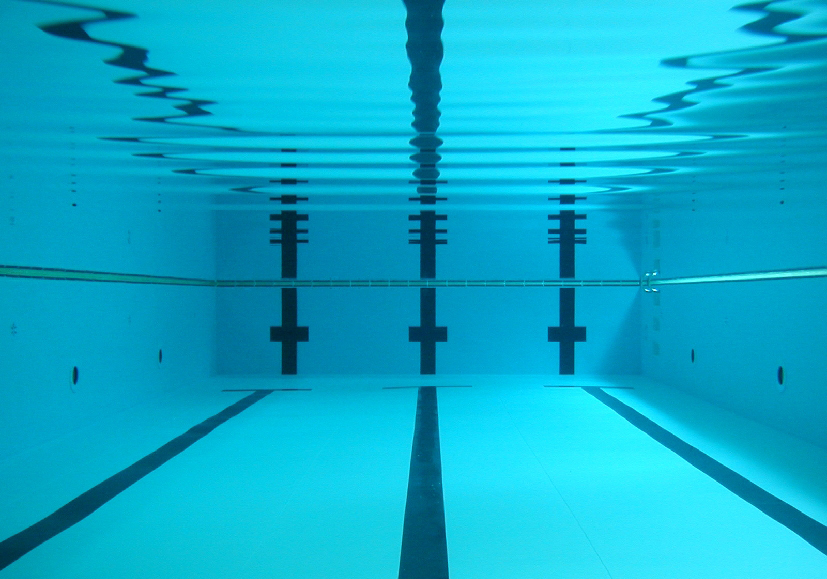
Comparison of turbidity in a pool, with and without optimised water treatment
Not All Sand Filters Are Created Equal
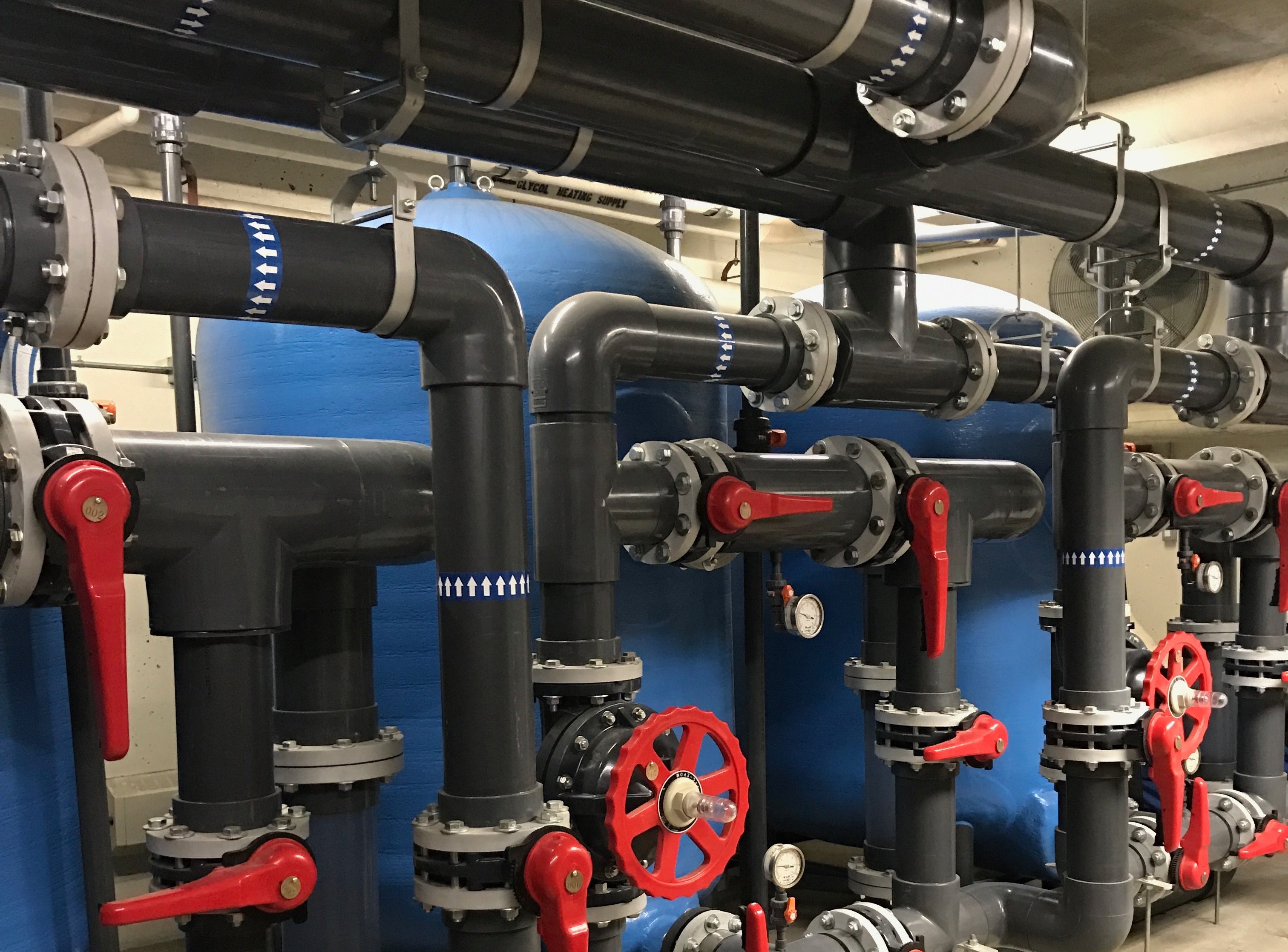
While sand filters currently remain the most common choice for commercial pools, their effectiveness varies widely depending on design. Many sand/media filters are designed with lateral collectors and have minimal freeboard space above the media; whilst they may be adequate for aquaculture or industrial water treatment applications, they are not ideal for commercial pool use.
For optimal performance in commercial pools, filters should feature:
A nozzle plate design
Generous freeboard capacity (space above the filter media)
Unrestricted backwash flow
Filters built to the German DIN 19605 standard (or similar standard) tend to perform exceptionally well—assuming proper installation. However, these models are typically taller than economy-style filters with lateral collectors, so the available plant room height must be considered during planning.
Emerging Technology: Ceramic Membrane Filters
Ceramic membrane filters are a newer but increasingly popular option in the pool industry. These systems offer excellent pollutant removal, filtering particles down to just a few microns. Their short and frequent backwash cycles help eject contaminants from the system before chlorine can fully react with them.

Compact, fully automated, and efficient, ceramic membrane systems also reduce the workload for plant operators—making them an attractive modern alternative.
Final Thoughts
Calculating chlorine consumption per bather is a simple yet powerful way to assess your pool’s overall treatment efficiency. It can highlight opportunities to improve water treatment and reduce costs.
When upgrading or investing in new water treatment systems, selecting the right equipment can deliver long-term benefits:
Lower chlorine usage
Fewer chemical deliveries
Improved water and energy efficiency
A smaller carbon footprint
Optimising your pool’s filtration and treatment system isn’t just about water quality—it’s about smarter, more sustainable operation.
Considering modifying or upgrading your pool water treatment plant to improve efficiency? Check-out our video course "Optimising Pool Water Treatment For Energy Efficiency" This, and access to all our short video courses are included in our membership options.
Join The Pool Operators Club Community and get access to all the resources and help you need to elevate your pool operations.
#pooloperatorsclub #chlorination #commercial pools
Keep in touch!
Get notification of our latest blogs, important pool industry news, events and developments at The Pool opertors Club®.